Hey there, I’m Jake, and for the last 12 years, I’ve been on the ground (and in the control rooms) of steel pipe production lines—first as a line tech, now as the lead at our production line supply shop. Most days, I hear the same thing from pipe mill managers: “We’ve got this line that won’t stop throwing snags, and we’re bleeding money because of it.” I get it. A production line that’s idling, wasting good steel, or turning out pipes that get rejected is a nightmare. But from fixing 100+ lines across North America and the EU, I can tell you most of these problems are totally fixable—no need to rip out half your line or blow a whole budget. Let’s break down the most common ones I see, how to spot ’em fast, and what actually works to solve ’em. Steel Pipe Production Line

First up, let’s talk about one that creeps up on you like a leak in a hydraulic line: inconsistent pipe wall thickness. It sounds basic, but I’ve seen lines pumping out pipes where the wall is 12mm on one end and 10mm on the other—way too much variation for oil and gas, construction, or any application that needs precision. A lot of folks blame the raw steel, but 9 times out of 10, it’s not the steel coil—it’s the roll stands. Roll stands that are worn, misaligned, or have uneven pressure from the hydraulic cylinders. Here’s why that happens: over time, the roll bearings seize a tiny bit, so when the line speeds up, one roll isn’t turning as fast as the other, or the gap between top and bottom rolls shifts randomly. Another culprit? The entry and exit guides. If they’re bent out of shape, the pipe isn’t feeding straight into the rolls, so it gets pushed off-center, which thins one side of the wall.
The fix for this isn’t guesswork. First, do a quick roll stand inspection every 2 weeks—pull a roll out, check the bearing play with a feeler gauge. If there’s more than 0.5mm of play, replace the bearings (we stock these off-the-shelf, no 6-week wait for custom parts). For alignment, use a laser alignment tool on the roll stands, not just a tape measure—tape is too loose for tight tolerances. And if your guides are worn? We make custom, precision-machined guides that lock the pipe dead-center as it feeds in, no more wobble. Last year, a pipeline shop in Texas was rejecting 18% of their pipes because of wall thickness; we did a quick roll and guide swap, and they got that rejection rate down to 2% in 3 days.
Next big one: weld seam defects. This is the most costly problem, full stop. A bad weld seam means the pipe gets rejected at hydro testing, or worse, fails in the field—costs way more than fixing it upfront. I’ve seen every weld flaw under the sun: undercut, overlap, porosity, even full breaks. 90% of these come from two things: inconsistent welding parameters and bad joint preparation. Let’s be real—if you’re still setting weld current, voltage, and speed with manual dials, that’s a recipe for mistakes. One operator might crank the current too high, burn through the steel; the next, turn it too low, get a weak seam. And joint prep? If the edges of the pipe aren’t beveled evenly, or have burrs left from cutting, the weld can’t penetrate properly.
The fix here is simple: upgrade to an automatic welding system with real-time parameter monitoring. Modern systems use sensors that track current, voltage, and travel speed every 0.1 seconds, and if it drifts even a little, they auto-adjust so the weld stays consistent. No more human error. For joint prep, switch to a precision pipe beveling machine—manual cutting leaves uneven edges, but a robotic beveler gets a uniform 30-degree bevel every time, no burrs. We installed these on a line in Poland last quarter, and their weld-related rejects dropped 22% in their first month alone. Also, add a post-weld inspection step with ultrasonic testing (UT) instead of just visual checks—UT can spot tiny porosity that the human eye misses, so you catch flaws before they turn into big problems.
Third, let’s talk about something that drives line managers crazy: line downtime from equipment failures, especially in the forming and sizing sections. I’ve seen lines where the sizing rolls seize up every 8 hours, or the straightening unit gets jammed, stopping the whole line for 2+ hours. A lot of people chalk this up to “old equipment” and think they need a full line overhaul, but most of the time it’s poor maintenance practices. Most shops only lubricate the big, obvious parts like the main motor, but the small parts—like the feed screws in the straightener, the chain links in the transfer system—are neglected. They get loaded with steel shavings and grime, so they wear out fast and seize.
Another big culprit here is temperature fluctuations. If your production line is in a shop where the temp swings 20 degrees between day and night, the metal parts expand and contract, throwing off alignment. The sizing rolls that were perfectly aligned at 70°F are off by a millimeter when it’s 50°F, leading to jams. The fix here isn’t a full replacement (trust me, that’s way more expensive than it sounds). First, set up a preventive maintenance (PM) schedule that’s specific to your line—no generic “lubricate every month.” For example, lubricate the straightener feed screws every 100 operating hours, clean all steel shavings from transfer chains every week. We also add temperature sensors to key line sections—they alert you when a roll or bearing is getting too hot, so you can shut down for a quick fix before it seizes. Last year, a pipe manufacturer in Ohio was having 3 unplanned downtime stops a week from sizing roll issues; we helped them build a custom PM schedule, and they haven’t had a single unplanned sizing-related stop in 6 months.
Fourth, let’s get to surface defects—scratches, dents, and “orange peel” texture on the pipe’s outer surface. These might seem minor, but some clients will reject a pipe if it has even a small scratch, especially for structural or automotive applications. I’ve seen lines where a single misaligned guide roller scrapes the entire pipe length, leaving a deep scratch that’s un-repairable. Orange peel comes from over-forming—when the rolls push the steel too hard during the forming stage, it doesn’t flow evenly, creating that bumpy texture.
Scratches are the easiest fix: check all the contact points that touch the pipe—rolls, guides, scrapers. Any sharp edge, burr, or nick on these parts will leave a mark. Grind down any nicks, or replace the rolls if they’re too worn. For orange peel, adjust the forming roll gaps incrementally—don’t cram the rolls too tight at once. Our forming systems have adjustable roll gaps that let you tweak the pressure per section, so you can get a smooth, uniform pipe surface without over-forming. We also add anti-scratch sleeves to high-contact areas—they’re cheap, easy to swap out, and stop 90% of surface scratches from transfer. A company in Mexico was wasting 15% of their pipes to surface scratches; we swapped their worn rolls and added the sleeves, and that number dropped to 1% immediately.
Wait, there’s one more problem I see all the time that’s a hidden money drain: material waste from improper scrap handling. When a pipe is rejected, most lines just cut it off and toss it, but if you’re cutting it too early or too late, you’re wasting 2-3 feet of good pipe every time. Also, if the scrap chopper is misaligned, it leaves uneven ends on the pipe, so you have to cut more off later, adding to waste. The fix here is adding a smart tracking system that flags defects as they happen—like if the weld seam is bad, the line automatically signals the cut-off saw to hold, so you only cut off the exact flawed section, not a whole pipe. We installed these on a line in Texas, and they cut their steel waste by 11% in the first quarter, which added up to $120k in savings for them.
Now, let’s be real—you might be reading this and thinking, “My line is already having 3 of these problems right now. What do I do next?” The worst thing you can do is ignore small issues because they’ll only get worse, and cost you more down the line. You don’t need to buy a whole new line—most of the fixes we talked about are retrofits or small adjustments to your existing equipment.
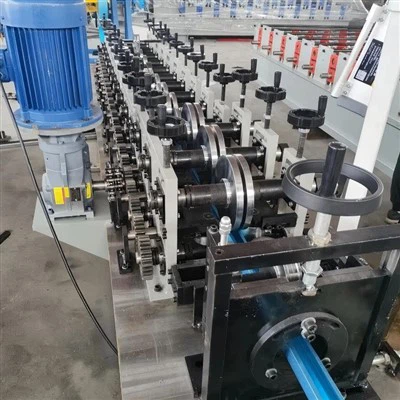
If you’re tired of dealing with these issues, we can help. We’ve built custom solutions for lines exactly like yours, whether you need roll stand upgrades, automatic welding systems, or a custom PM plan. We work with small, mid-sized, and large pipe mills, so we’re not here to sell you something you don’t need. Just reach out to talk through your specific line problems, no sales pitch, no hidden fees.
Pipe-making Machinery Spare Parts References:
- Steel Pipe Production: Quality Control and Defect Prevention Handbook. American Iron and Steel Institute, 2021.
- Predictive Maintenance for Industrial Production Lines. Industrial Maintenance and Technology Association, 2022.
- Welding Defects in Seamless and Welded Steel Pipes: Identification and Correction. International Institute of Welding, 2020.
- Surface Quality Standards for Carbon Steel Pipes. Pipe Fabrication Industry Association, 2023.
- Material Waste Reduction in Metal Forming Processes. Society of Manufacturing Engineers, 2021.
Tianjin Binhai Yashanway Import and Export Co., Ltd.
Tianjin Binhai Yashanway Import and Export Co., Ltd. is one of the most reliable steel pipe production line manufacturers and suppliers in China, also supports customized service with low price. Welcome to wholesale bulk steel pipe production line made in China here from our factory. Contact us for quotation.
Address: B-508, Xiangnian Plaza, Dongjiang Road, Hexi District, Tianjin, China
E-mail: crystal@yashanway.com
WebSite: https://www.yashanway.com/
