Hey there! I’m a supplier of laser levels, and I’ve seen firsthand how a well – calibrated laser level can make a world of difference in construction, DIY projects, and all sorts of leveling tasks. In this blog, I’m gonna share with you how to calibrate a laser level. Laser Level

Why Calibration Matters
First off, let’s talk about why calibration is so important. A laser level is a precision tool. If it’s not calibrated correctly, the lines it projects won’t be accurate. That means your walls might end up crooked, your floors won’t be level, and your whole project could be a mess. In construction, even a tiny error can lead to big problems down the road, like doors not fitting properly or uneven countertops. So, keeping your laser level calibrated is crucial for getting professional – grade results.
Tools You’ll Need
Before you start the calibration process, you’ll need a few things. You’ll need a stable surface to set up your laser level, like a tripod or a flat table. A measuring tape is also essential. You’ll use it to measure distances and check the accuracy of the laser lines. A spirit level can come in handy too. It’ll help you make sure your laser level is set up straight in the first place. Oh, and don’t forget a pencil and some paper to jot down your measurements.
Step – by – Step Calibration Process
Step 1: Set Up Your Laser Level
Find a large, open area where you can project the laser lines clearly. Set up your laser level on a stable surface. Use the spirit level to make sure it’s level in all directions. If it’s not level, adjust the legs of the tripod or the base of the table until it is. This is a super important first step because if your laser level isn’t set up straight, the calibration won’t be accurate.
Step 2: Project the Laser Lines
Turn on your laser level and let it project the lines onto a wall or a target. Make sure the lines are visible and sharp. If the lines are blurry or faint, check the batteries or the laser lens. You might need to clean the lens or replace the batteries.
Step 3: Measure the Lines
Take your measuring tape and measure the distance from the laser level to the wall at different points along the projected line. For example, measure the distance at the top, middle, and bottom of the line. Write down these measurements. If the measurements are the same at all points, the line is straight and level. But if there are differences, that means the laser level needs calibration.
Step 4: Adjust the Laser Level
Most laser levels have adjustment screws or knobs. These are used to correct the alignment of the laser lines. If the line is high on one end and low on the other, use the adjustment screws to tilt the laser up or down until the line is straight. You might need to make small adjustments and re – measure the line several times to get it just right.
Step 5: Check the Cross – Lines
If your laser level projects cross – lines (a horizontal and a vertical line), you need to check the accuracy of both lines. Repeat the measurement process for the vertical line. Make sure it’s straight and perpendicular to the horizontal line. You can use a square or a right – angle tool to check the perpendicularity. If the lines aren’t perpendicular, use the adjustment screws to correct the alignment.
Step 6: Test the Laser Level
Once you’ve made all the adjustments, test the laser level in different positions and angles. Move it to a different spot and project the lines again. Measure the lines and check the cross – lines. If everything is still accurate, your laser level is properly calibrated.
Common Calibration Issues and How to Fix Them
Blurry or Faint Lines
As I mentioned earlier, blurry or faint lines can be caused by dirty lenses or low – battery power. Clean the lens with a soft, dry cloth. If the batteries are low, replace them with new ones.
Inconsistent Lines
If the laser lines are inconsistent, meaning they’re wavy or have gaps, it could be a sign of a mechanical problem. Check the internal components of the laser level. Sometimes, a loose part can cause the lines to be inconsistent. If you’re not comfortable opening the laser level, take it to a professional for repair.
Incorrect Cross – Line Alignment
If the cross – lines aren’t perpendicular, it could be due to a misaligned internal mirror. Use the adjustment screws to correct the alignment. If you can’t get the lines to be perpendicular, it might be a more serious problem, and you should contact the manufacturer or a professional technician.
Regular Maintenance for Calibration
Calibration isn’t a one – time thing. You should calibrate your laser level regularly, especially if you use it frequently or if it’s been dropped or bumped. A good rule of thumb is to calibrate it at least once every few months or before starting a big project.
Also, proper storage is important. Keep your laser level in a protective case when you’re not using it. This will prevent dust, dirt, and damage from affecting its accuracy. And make sure to handle it gently. Dropping or rough handling can throw off the calibration.
Conclusion
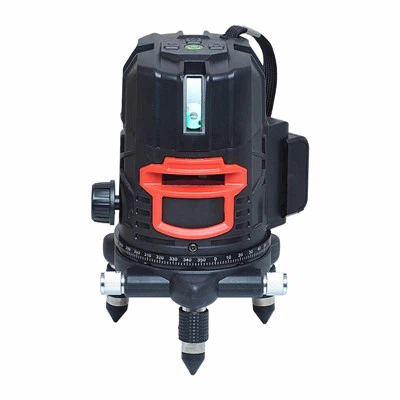
Calibrating a laser level isn’t rocket science, but it does require a bit of patience and attention to detail. By following the steps I’ve outlined in this blog, you can ensure that your laser level is always accurate and ready to use.
Line Laser If you’re in the market for a new laser level or need some advice on calibration, I’m here to help. I’ve got a wide range of high – quality laser levels that are easy to calibrate and use. Whether you’re a professional contractor or a DIY enthusiast, I’ve got the right tool for you. Reach out to me to start a conversation about your needs and let’s find the perfect laser level for your next project.
References
- Construction Tools Handbook
- Laser Level User Manuals
Nantong Jiadebao Optoelectronic Technology Co., Ltd.
As one of the most professional laser level manufacturers in China, we’re featured by quality products and low price. Please rest assured to wholesale bulk discount laser level in stock here from our factory. We also accept customized orders.
Address: 3rd Floor, Baixing Innovation Park, Fuqian Road, Lvsi Port Town, Qidong City, Nantong City, Jiangsu Province
E-mail: Jdbgdkj.alex@outlook.com
WebSite: https://www.jdbgdkj.com/
