Hey everyone, I’m Jake—one of the go-to guys for stamping robots over here, and I get asked this question all the time: “How accurate is a stamping robot, really?” Let’s cut through the hype, skip the boring tech jargon, and be real about it, since I work with these things day in and day out for actual factories, not just lab tests. No fancy, made-up numbers here—just what I see on the shop floor, week after week. Stamping Robot
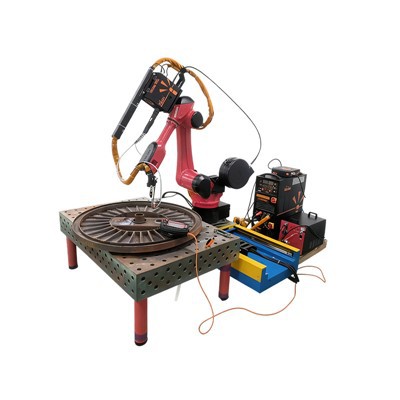
First off, let’s get one thing straight: accuracy isn’t a one-size-fits-all number. I’ve had clients call me panicking because their old robot was “off by 2mm” and think a new one will fix everything, but half the time it’s not the robot—it’s the setup. Let’s break this down into the numbers that actually matter, not the marketing fluff. Most standard stamping robots we supply have a repeatability of ±0.05mm to ±0.2mm. Wait, hold on—repeatability vs. accuracy? Yeah, that’s the big mix-up everyone makes. Repeatability is how consistently the robot hits the same spot every single time, even if that spot’s a tiny bit off from the absolute blueprint number. Accuracy is how close that spot is to the actual design. For stamping work, repeatability is way more important. Because if the robot is consistent, your parts won’t shift across the press—no more wasted scrap from parts that don’t line up with the die.
Let me give you an example from a client I worked with last quarter. They run a shop making metal brackets for car door hinges. They were using a cheap imported robot that was advertised as “high accuracy,” but their defect rate was 3.2%. We swapped in our mid-range stamping robot, tuned it properly, and their defect rate dropped to 0.4% in the first month. Why? Because that cheap robot had a repeatability of ±0.3mm—so every so often, it’d slip just enough to let the bracket shift, causing misstamps. Our units have ±0.08mm repeatability on the linear axes, and ±0.1° on rotational axes. For stamping, that’s more than enough—most stamping dies have a tolerance of ±0.5mm, so the robot’s numbers are way tighter than what the die can handle.
But wait, it’s not just the robot itself. I’ve seen top-tier robots run bad because of how they’re installed. For example, if the robot’s base isn’t bolted down to a reinforced foundation, or if the press it’s feeding into has too much vibration, that accuracy goes out the window fast. A client in Chicago tried skipping the reinforced base to save a few bucks, and within a week their robot’s repeatability jumped to ±0.4mm—all from press vibration shaking the whole unit. We had to come back, reinforce the base, and recalibrate, and it was back to its original accuracy. That’s why when we sell a robot, we don’t just drop it off and leave—we do a full on-site calibration, check vibration levels, make sure the end of arm tool (EOAT) is aligned perfectly with the die. That’s half the battle.
What about edge cases? Like if you’re stamping super small parts—say, electronics connectors that are only a few millimeters wide. For that, we supply higher-precision stamping robots with ±0.03mm repeatability. I worked with a guy making smartphone charging ports, and he was having issues with pins not lining up. We swapped in the precision model, and his misalignment went from 1.1% to zero. That’s the kind of accuracy that matters for tiny, high-value parts. But you don’t need that level for big, heavy parts—like trailer brackets, or appliance covers. Those can handle ±0.2mm easily, and paying for higher precision would just be a waste of money.
Another thing people don’t talk about: wear and tear. A lot of old robots lose accuracy over time because their joints wear down, or the gearboxes get loose. The stamping robots we sell use solid, hardened steel gears and sealed bearings—so they hold their accuracy for years. We have a client who’s been running our robot for 7 years now, stamping kitchen sink basins, and their repeatability is still at ±0.09mm. No re-calibration every month, no constant repairs. That’s way better than the old units he had that would need recalibration every 6 months and were off by ±0.5mm within a year.
Wait, let’s address the myth that robots are never inaccurate. I’ve seen that happen too, usually from bad programming. If your path planning is off, or if you set the wrong speed—if the robot is moving too fast into the die, it can flex a little, throw off its position. We train all our clients on basic programming tweaks, like slowing down the approach speed near the die, which fixes 90% of those “robot is inaccurate” issues. I had a new client last month who was blaming his robot for bad parts, and it turned out his programmer had the robot moving at full speed 10mm above the die, so it was bouncing a tiny bit. A 5-minute adjustment fixed it.
So let’s sum up what accuracy actually means for stamping robots, from someone who sells and troubleshoots these every day. Standard stamping robots: ±0.05mm to ±0.2mm repeatability, more than enough for 95% of stamping applications. High-precision models for small parts: ±0.02mm to ±0.05mm. Accuracy (as in, absolute alignment) depends on setup and calibration—do it right, and it will hit your exact part specs. Do it wrong, and even the best robot will be off.
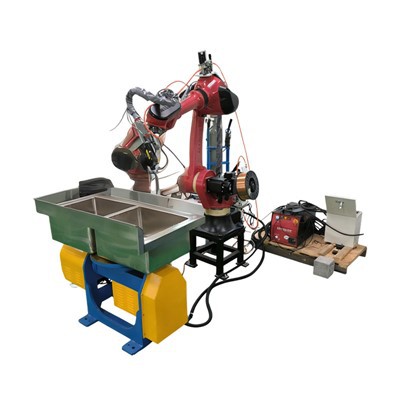
Now, if you’re looking to upgrade your stamping line and tired of scrap, downtime, and parts that don’t line up, hit us up to talk through your needs. We’ll walk you through what accuracy level you actually need, set it up right, and make sure it works for your specific parts. Don’t waste money on overkill precision you don’t need, or cheap robots that will cost you more in repairs and scrap. We’re here to make stamping work easier, faster, and more accurate.
Spray Painting Robot References
- Robotic Industries Association. (2022). "Industrial Robot Accuracy and Repeatability: Best Practices for Manufacturing Applications." RIA Report No. TR R15.06-2022.
- International Organization for Standardization. (2018). "Robots and Robotic Devices – Performance Metrics and Related Test Methods for Industrial Robots." ISO 9283:2018.
- Stamping Industry Association. (2023). "Key Performance Metrics for Automated Stamping Lines: Accuracy, Repeatability, and Scrap Reduction." SIA Technical Bulletin 2023-04.
Dongguan Chuanglida Intelligent Equipments Co., Ltd.
As one of the most professional stamping robot manufacturers and suppliers in China, we also support customized service. Please feel free to buy discount stamping robot in stock here from our factory. For price consultation, contact us.
Address: Room 201, Building 2, No. 61, Shachang 1st Road, Dalang Town, Dongguan City, Guangdong Province
E-mail: haoguangli001@outlook.com
WebSite: https://www.boruntestech.com/
