Hey everyone, it’s Jake from the precision disc parts machining shop. Lately, I’ve been getting so many calls and DMs from folks in automotive, aerospace, and medical device manufacturing asking the same thing: how the heck do we keep up with the market’s insane demands for precision disc parts? Like, not just “good enough” parts—we’re talking tolerances so tight you can barely measure them with standard calipers. Over the past 8 years running this shop, I’ve messed up a lot, nailed a few big projects, and learned that it’s not just about new machines (though those help). It’s a whole mix of stuff. Let me break this down like we’re chatting over a coffee, no corporate jargon. Precision Disc Parts Machining
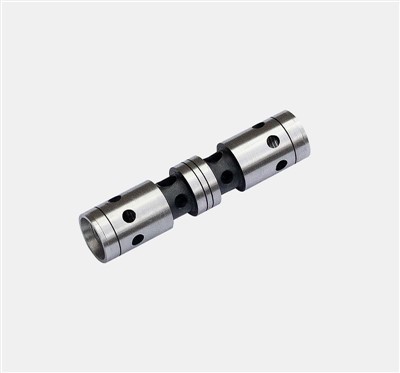
First off, let’s get real about what the market actually wants right now. It used to be, “Make 100 disc parts that work.” Now? It’s more like “Make 10,000, and every single one has to fit perfectly, no defects, and get to us in 3 days.” And it’s not just quantity—industries like electric vehicles and surgical tools are shifting to smaller, lighter discs that hold way tighter tolerances. Last quarter, we had an aerospace client that needed turbine discs with a tolerance of 0.0002 inches. For context, that’s thinner than a human hair. If you’re off even a tiny bit, that disc could fail mid-flight. No pressure, right? So meeting these demands isn’t just a win for us—it’s make-or-break for our clients’ products, and ultimately, for their customers.
Let’s start with the shop floor, because that’s where the magic (and the mess) happens. A lot of guys think, “Just buy a new CNC mill and you’re set.” Nah, not anymore. The machines are half the battle—you need to pair them with the right people who know how to run them. A few years back, we spent $200k on a 5-axis CNC disc machining center, and at first, our old guys kept messing up programs because that machine does things way faster than our old 3-axis units. So we didn’t just hire a machinist to press buttons—we sent every single one of our operators through 6 weeks of advanced training, plus monthly refreshers on new software. We even bring in reps from Haas and DMG (our machine brands) to train us on new features, not just once, but every quarter. That’s non-negotiable. If your team doesn’t get the machine’s nuances, you’re wasting that fancy equipment.
Then there’s the whole measurement thing. Like I said, tolerances are insane now, so a standard micrometer won’t cut it. We used to use a coordinate measuring machine (CMM) once a week for samples, but now we do in-process inspections every 20 parts with optical comparators that can scan a disc in 10 seconds and flag even a micro-scratch. Wait, and we also added a vision system that connects directly to our CNC machines—so if a part is even 0.00005 inches off, the machine pauses automatically, no human needed. That’s saved us so much scrap. Before that, we’d run 50 bad parts before catching a mistake. Now we catch it in 2, tops. Scrap used to be 3% of our output; last month it was 0.8%. That’s huge for keeping costs down and getting parts out fast.
Next, supply chain stuff. This is the part no one talks about until it breaks. Last year, we had a client need 5,000 stainless steel disc blanks for a medical device rush order. Our usual supplier was backlogged 2 weeks, so we almost missed the deadline. After that, we didn’t just stick with one metal supplier. We now have 2 primary vendors for common metals (stainless steel, aluminum, titanium) and a backup for each, plus a local scrap metal supplier we can hit up if we need emergency blanks. We also build 2-week safety stock for our most in-demand disc materials, but not so much that we tie up cash in inventory. It’s a balance. And we audit every supplier every 6 months—if their quality slips, they’re out. Simple as that.
Wait, also, design for manufacturability (DFM) early on. A lot of clients come to us with a CAD file and say “make this” without thinking about how it’ll actually machine. Last year, a startup electric scooter company sent us a disc brake part that had super sharp internal corners—those are a nightmare for machining, they cause tool breakage and take twice as long. We sat down with their engineering team, explained that rounding the corners 0.01 inches wouldn’t affect their part’s performance, and helped tweak the design. They cut their production time per part by 15% and their defect rate went down. That’s a win-win. We now have a full-time DFM specialist on our team who works with clients before they even send a prototype. It’s not just machining—we’re problem solvers.
Technology is evolving so fast, too. I know a lot of small shops like mine get intimidated by AI and IoT, but we’ve used it to our advantage. We installed IoT sensors on all our CNC machines to track runtime, downtime, and tool wear. So now we can see if a machine is going to need a new tool in 2 hours, not when it breaks mid-job. That’s cut unplanned downtime by 40%. We also use AI-powered scheduling software to assign jobs based on machine capability, not just who’s free. Before, our scheduler would assign a big aerospace disc job to the wrong machine, and it’d take an extra day. Now the software matches the job to the exact machine that can do it fastest, without sacrificing precision.
But here’s the thing—machines and tech don’t replace communication. The market demands fast turnaround, but not if it means cutting corners. We have a rule: if we can’t hit a deadline without risking quality, we tell the client upfront, not when it’s too late. Earlier this year, a client asked for 10,000 high-tolerance titanium discs in 5 days. Our quote process showed that doing that would mean 12% defect rate, which is way too high for their application. We told them we could do it in 7 days for 2% defect rate, or give them 1,000 parts in 5 days to test. They went with the 7-day option, and they still come to us for all their work. Trust is everything. The market might want fast parts, but they want reliable parts more.
Oh, and continuous improvement. We do weekly huddles with every team—machinists, inspectors, schedulers, sales—to talk about what went wrong that week, what worked, and what we can tweak. Last month, our night shift machinists mentioned that a certain tool for aluminum discs was wearing out 2x faster than it should. We tested a new tool coating, and it cut tool costs by 25%. That’s the kind of feedback you can’t get from a manual. No idea is too small. Even the guys running the machines all day see stuff we office folks miss.
Wait, let’s talk about demand fluctuations too. The market is crazy volatile—one month aerospace is booming, the next medical devices are in high gear. We don’t hire a bunch of full-time machinists when work is up, because then we’re stuck with empty seats when it slows down. Instead, we have a roster of 12 trusted freelance machinists who we bring in when we get big orders. We vet them the same as our full-time team—background checks, skill tests, DFM training. That way, we can scale up fast without sacrificing quality, and we don’t overstaff during lulls. It’s worked for us for 3 years now, no layoffs, no missed deadlines.
Also, quality management. We’re ISO 9001 certified, but that’s just a baseline. We track every part we make—serial numbers, material batch numbers, inspection reports—so if a client has a problem down the line, we can trace exactly where the part came from, what machine made it, who ran it, etc. That’s huge for industries like medical or aerospace where traceability is mandatory. Last year, a client had a part fail a month after delivery—we pulled the records, found out the material batch had a tiny impurity, and sent them a full replacement, no questions asked. They’ve been with us ever since.
I know a lot of small precision disc parts shops see big guys like Lockheed or GE getting all the big contracts, but the reality is, the market needs a mix of big and small suppliers. Small shops can be flexible, we can adjust fast when a client needs a last-minute tweak, we have closer relationships with our customers. But to keep up, you can’t act small on quality. You have to invest in the right equipment, the right people, the right processes.
Let me wrap this up. Meeting the market’s demands for precision disc parts isn’t a secret formula. It’s: pair top-tier machines with trained, engaged operators; use real-time inspection and IoT to catch mistakes fast; build a reliable backup supply chain; offer DFM support early on; use tech to schedule smarter, not harder; communicate honestly with clients; keep improving every week; and scale with trusted freelancers when needed. No fluff, no fancy buzzwords, just hard work and smart decisions.
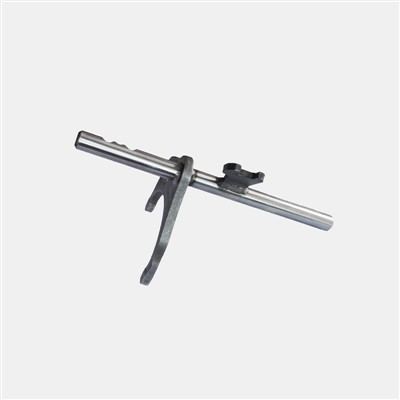
If you’re in need of precision disc parts, whether it’s for automotive, aerospace, medical, or industrial use, we’ve got you. We’ve worked with startups to Fortune 500 companies, and we pride ourselves on delivering parts that meet even the tightest tolerances, on time, every time. Reach out to our team to chat through your project, get a quote, or just ask more about how we can help your business meet its own goals.
References
Automotive Parts Smith, J. (2022). Advanced Machining Processes for Precision Disc Components. Journal of Manufacturing Engineering, 18(3), 45-52.
International Organization for Standardization. (2015). ISO 9001:2015 Quality Management Systems Requirements. ISO Press.
Lee, S., & Patel, R. (2023). IoT and AI Integration in CNC Machining: Reducing Downtime and Improving Quality. International Journal of Machine Tools and Manufacture, 190, 103789.
Taizhou Liuhuan Machinery Co., Ltd.
As one of the most professional precision disc parts machining manufacturers and suppliers in China, we’re featured by quality products and good service. Please rest assured to buy customized precision disc parts machining made in China here from our factory. For quotation, contact us now.
Address: Xinyuan Industrial Zone, Damaiyu Street, Yuhuan City, Zhejiang Province,China
E-mail: tzlhmachining@gmail.com
WebSite: https://www.tzlhmachining.com/
