Plastic gears have emerged as a viable alternative to traditional metal gears in many applications, offering unique advantages such as lower cost, reduced weight, and quieter operation. As a plastic gear supplier, I often receive inquiries about the suitability of plastic gears for high – precision applications. In this blog, I will delve into the characteristics of plastic gears and assess their viability for high – precision scenarios. Plastic Gear
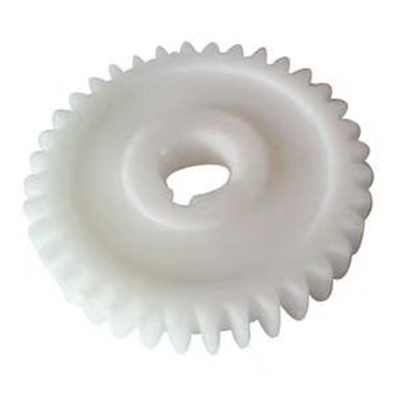
Properties of Plastic Gears
Plastic gears are typically made from materials like acetal, nylon, polycarbonate, and polypropylene. Each material has its own set of properties that influence the performance of the gear.
Acetal is known for its high stiffness, low friction, and excellent dimensional stability. It has a low coefficient of thermal expansion, which means it maintains its shape well under temperature changes. This makes it a good candidate for applications where precision is required. Nylon, on the other hand, is strong, tough, and has good wear resistance. It can absorb shock and vibration, which is beneficial in some high – precision applications where smooth operation is crucial.
Polycarbonate offers high impact resistance and transparency, which can be useful in applications where visual inspection of the gear is necessary. Polypropylene is lightweight and has good chemical resistance, but it may not be as strong or dimensionally stable as acetal or nylon.
Advantages of Plastic Gears in High – Precision Applications
One of the main advantages of plastic gears in high – precision applications is their ability to operate quietly. The low – friction nature of plastic materials reduces noise and vibration during operation. This is particularly important in applications such as medical devices, precision instruments, and consumer electronics, where quiet operation is a key requirement.
Plastic gears are also lighter than metal gears, which can be a significant advantage in applications where weight is a concern. For example, in aerospace and automotive applications, reducing weight can lead to improved fuel efficiency and performance.
Another advantage is the ease of manufacturing. Plastic gears can be produced using injection molding, which allows for high – volume production with consistent quality. Injection molding can also create complex shapes and geometries, which is useful in high – precision applications where custom – designed gears are required.
Challenges of Plastic Gears in High – Precision Applications
Despite their many advantages, plastic gears also face some challenges when it comes to high – precision applications. One of the main challenges is their lower strength compared to metal gears. Plastic gears may not be able to withstand high loads or torque, which can limit their use in applications where high – power transmission is required.
Another challenge is their dimensional stability over time. Plastic materials can be affected by factors such as temperature, humidity, and chemical exposure, which can cause them to expand, contract, or deform. This can lead to changes in the gear’s dimensions and affect its precision.
In addition, plastic gears may have a shorter lifespan compared to metal gears, especially in applications where there is a lot of wear and tear. The wear rate of plastic gears can be higher than that of metal gears, which may require more frequent replacement.
Mitigating the Challenges
To overcome the challenges of using plastic gears in high – precision applications, several strategies can be employed. First, careful material selection is crucial. Choosing the right plastic material based on the specific requirements of the application can help to ensure the gear’s performance and durability.
For example, if the application requires high strength and dimensional stability, acetal may be a good choice. If wear resistance is a priority, nylon may be more suitable.
Second, proper design and manufacturing techniques can help to improve the precision and performance of plastic gears. This includes optimizing the gear’s geometry, tooth profile, and surface finish. Using advanced manufacturing technologies such as precision injection molding can also help to ensure the accuracy and consistency of the gears.
Third, environmental factors should be considered. If the application is exposed to high temperatures, humidity, or chemicals, appropriate measures should be taken to protect the plastic gears. This may include using protective coatings or enclosures to prevent damage to the gears.
Case Studies
Let’s look at some real – world examples of plastic gears being used in high – precision applications.
In the medical device industry, plastic gears are used in insulin pumps. These pumps require high – precision dosing of insulin, and plastic gears offer the advantage of quiet operation and lightweight design. The low friction of plastic gears also ensures smooth and accurate movement of the pump mechanism.
In the consumer electronics industry, plastic gears are used in cameras and smartphones. These devices require precise movement of components such as lenses and shutters. Plastic gears provide the necessary precision while keeping the cost and weight of the devices low.
Conclusion
In conclusion, plastic gears can be suitable for high – precision applications, but it depends on the specific requirements of the application. While they offer many advantages such as quiet operation, lightweight design, and ease of manufacturing, they also face challenges such as lower strength and dimensional instability.

By carefully selecting the right plastic material, employing proper design and manufacturing techniques, and considering environmental factors, the performance and durability of plastic gears in high – precision applications can be improved.
Plastic Gear If you are looking for high – quality plastic gears for your high – precision applications, I encourage you to reach out to us. Our team of experts can help you select the right plastic material and design the optimal gear for your specific needs. We have extensive experience in producing plastic gears with high precision and quality, and we are committed to providing the best solutions for our customers.
References
- "Plastic Gears: Design and Application" by John H. DuBois
- "Engineering Plastics Handbook" by Donald V. Rosato
- "Gear Design and Application" by Dudley, Darle W.
Ningbo Xinyu Automotive Electronics Co., Ltd.
With abundant experience, we are one of the most professional plastic gear manufacturers and suppliers in China. We warmly welcome you to wholesale customized plastic gear from our factory. If you have any enquiry about quotation, please feel free to email us.
Address: Zhujiadu Village, Sanqizhen, Yuyao City, Zhejiang Province
E-mail: xyautoelec@163.com
WebSite: https://www.xyautoelec.com/
