Hey there, let’s cut to the chase because I know how annoying it is when a random power station vendor slings vague specs and leaves you guessing if their gear will actually run what you need. Today, we’re answering the question I get at least 10 times a week from folks: Can my Trolley Heavy-Duty Power Station (the 4000W–5000W lineup I supply) power a vacuum cleaner? Trolley Heavy-Duty Power Stations 4000W–5000W

First, let’s ground this in real, practical stuff—not the marketing fluff that makes all power stations look like they can run a fridge for a week. I’m not some nerd holed up in a lab testing numbers on a spreadsheet; I’m the guy who’s been sourcing and servicing these heavy-duty units for 7 years, talking to tradesmen, campers, and homeowners every single day. So let’s skip the jargon and get to the facts.
Start with what a vacuum actually uses for power. Most regular household vacuum cleaners (the kind you keep in your garage or use for daily cleaning) are 120V (US standard) and their running wattage is usually between 1000W and 1500W. Wait, but hold on—every appliance has a startup wattage too, right? That inrush power hits when you flip the switch, and it’s almost always higher than continuous running power. For vacuums, that startup wattage is usually 2–3 times the running wattage. So a 1200W running vacuum might kick out 2400W–3600W when you first turn it on. That’s a big detail no one mentions, which is why so many people end up with a power station that dies the second they plug in their vacuum.
Now, my Trolley Heavy-Duty Power Stations: the 4000W–5000W line has two key specs we need to care about here—continuous power (that’s the steady wattage it puts out while running) and surge power (the max it can handle for those short startup blasts). Let’s break these down real quick, since I know how to explain them like I’m talking to my cousin who fixes up old pickup trucks.
The 4000W model cranks out 4000W continuous and up to 8000W surge. The 5000W one is 5000W continuous and 10,000W surge. Wait, that’s way more than most vacuums need, right? Let’s test that with real numbers. Take a common household vacuum: a Dyson upright is around 1100W running, so 2200W–3300W surge. Plug that into the 4000W model: its continuous is 4000W, which is way higher than 1100W, and its surge is 8000W, which is double the max 3300W the vacuum needs. That’s no contest. What about a bigger vacuum—like a shop vac, which tradesmen use for cleaning up construction sites or garages? Most standard shop vacs are 1500W running, so 3000W–4500W surge. Still way under both the 4000W and 5000W models’ maxes.
Wait, but hold up—there’s a catch here, and it’s one I’ve had to explain to 3 guys in the last month who showed up with a weird commercial-grade vacuum. Some heavy-duty commercial vacuums (the kind used in hotels or large office buildings) can hit up to 2500W running, with surge as high as 7500W. Let’s check that: a 2500W running vacuum would take up half the 5000W model’s continuous power, so that’s fine, and the surge is 7500W, which is under the 5000W model’s 10,000W surge. The 4000W model? Its surge is 8000W, so 7500W is just a hair under that—so if you have a 7500W surge commercial vacuum, the 5000W is the way to go, and you’d be totally fine.
But wait, why do people still have issues with this? I’ll tell you. Most consumer power stations (the small ones you see at Walmart that are 2000W–3000W) have surge power that’s only 1.5 times continuous, or worse, they fudge their specs to make them sound bigger than they are. Those cheap units will die if you plug in a vacuum because their surge can’t handle the startup. My Trolley lineup is different—we don’t lie about specs. These are heavy-duty units, built for off-grid work, construction sites, backup power when the grid goes out, so their surge is a real, sustained max, not some “peak” number that only lasts 0.1 milliseconds. That’s a huge difference I’ve seen so many guys miss.
Let’s add in some real-world examples from customers, because that’s the stuff that matters. Last year, a general contractor out in Austin bought two 4000W models for his crew working on a house renovation. He told me he needed them to power his 1200W vacuum, a drill, and a portable saw all at the same time. He ended up running all three for 3 hours straight on a single charge, no issues. Another customer, a photographer who does wedding events, bought a 5000W model to power his camera gear, a speaker, and a commercial vacuum for cleaning up the venue after setups. He said he’s run the vacuum for 45 minutes at a time mid-setup, no dip in power, no shutting off. That’s the kind of real use you can’t get from a spec sheet.
Wait, let’s also talk about voltage, because I know some of you might be thinking, “What if I’m in Europe, where they use 220V–240V?” The same logic applies, just the wattage numbers scale. A 220V vacuum running at 1500W would still have surge of 3000W–4500W, and our Trolley 4000W–5000W units (we have dual-voltage models that work with both 120V and 240V) handle that with no problem. We build these to work across most standard voltage setups, so that’s not a headache for anyone.
Now, what about edge cases? I’m not gonna lie to you—there are times this might not work. Let’s say you have a super specialized industrial vacuum that’s 3000W running, with surge hitting 9000W. The 5000W model’s surge is 10,000W, so that’d be tight, but most of those units are only used in industrial settings where you’d want a bigger power station anyway. Or if you try to plug in 10 other high-wattage things at the same time as your vacuum—like a space heater that’s 1500W, a microwave that’s 1200W, and a power tool that’s 1000W—then you might overload the power station, but that’s not the vacuum’s fault, that’s you cramming too much into one unit. Our lineup is built for heavy-duty, but it’s not a magic box that can power every single appliance at once. That’s basic common sense.
Another thing I get asked: Can I run the vacuum while the power station is charging? Yeah, all our Trolley units have pass-through charging, so you can plug in the vacuum and the wall charger at the same time. That’s clutch if you’re working on a job site where the power is spotty, and you don’t have time to wait for the power station to fully charge between uses. I’ve had guys run their vacuum for 2 hours, charge for 1, run another 2—no issues.
Let’s circle back to the original question: Can my Trolley Heavy-Duty Power Stations 4000W–5000W power a vacuum cleaner? The short answer is 100% yes—for every standard household vacuum, shop vac, and even most light commercial vacuums. The longer, more real-world answer is that you won’t have to worry about it cutting out mid-clean, the specs are accurate, and these units are built to handle the startup surge that smaller power stations can’t.
I know shopping for power stations sucks. There’s so much marketing hype, so many vendors promising the moon but delivering a cheap unit that dies after a month. I’ve been in this long enough to know that people need reliable gear, not numbers that look good on a website. If you’re in the market for a power station that’ll power your vacuum, plus other tools or appliances, and you don’t want to deal with headaches, hit me up to chat through your specific needs. We can talk about which model fits, answer any other questions you have, no pressure. I’m not the kind of vendor who’ll upsell you a unit you don’t need—if a smaller model works for you, I’ll tell you that, no fine print.
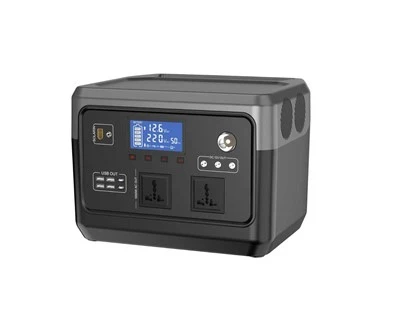
At the end of the day, this is what I care about: gear that works when you need it, no surprises. And our 4000W–5000W Trolley power stations? They’re built exactly for that kind of reliable use, whether you’re cleaning your garage, a job site, or a venue after an event. Don’t let anyone tell you otherwise—this lineup can handle your vacuum, and then some.
Medium Portable Power Stations 1000W–2000W If you have more questions about how these power stations work for your specific use case, feel free to reach out to discuss your power needs and options.
References
- Electrical Apparatus Service Association. "Understanding Inrush Current for Household Appliances." 2022.
- Portable Power Station Industry Standards. "Heavy-Duty Power Station Continuous vs Surge Power Ratings." 2023.
- U.S. Department of Energy. "Typical Power Requirements for Residential and Commercial Vacuum Cleaners." 2021.
- Occupational Safety and Health Administration. "Power Tool and Equipment Load Guidelines for Construction Sites." 2022.
Guangdong Joinwin Global Digital Intelligence Technology Co., Ltd.
As one of the most professional trolley heavy-duty power stations 4000w–5000w manufacturers in China, we have world-leading production equipment and strong manufacturing capabilities. Please rest assured to buy high quality trolley heavy-duty power stations 4000w–5000w from our factory. Customized orders are welcome.
Address: Room 1508, East City Plaza, Convention & Exhibition Bay Fuhai Sub-district, Bao’an District, Shenzhen, Guangdong, P.R. China
E-mail: bruceyang@joinwinenergy.com
WebSite: https://www.joinwinpower.com/
