If you’re a project manager for a large-scale industrial, infrastructure, or marine build, you know that the difference between a on-time, on-budget project and one plagued with delays, safety risks, and costly rework often comes down to small, often overlooked details. For my team at [Grating Accessories Supplier], we’ve spent 15 years supporting large-scale projects across North America, from coastal refineries to bridge walkways and offshore platform decks, and more often than not, the biggest challenges we see don’t stem from the grates themselves—they come from the accessories that hold those grates in place. Choosing grating accessories isn’t just about picking parts that fit; it’s about matching every component to your project’s unique environment, load requirements, and long-term maintenance needs. In this post, I’ll break down the key factors we walk every large-scale client through when picking grating accessories, drawn from real projects that taught us exactly what works when you’re working with grids that cover thousands of square feet. Grating Accessories
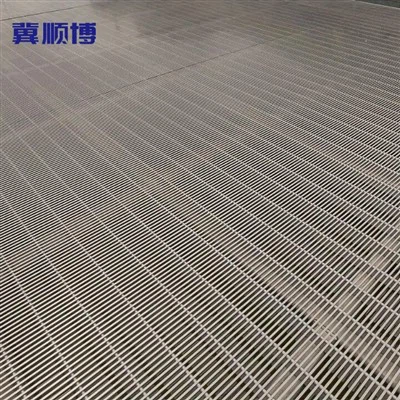
First, let’s start with the non-negotiable: aligning accessories with the grate type you’re using. You wouldn’t bolt a square metal grate designed for a catwalk to a heavy-duty drain grate for a chemical plant, and the same goes for accessories. The most common grate types we see in large projects are bearing bar gratings, swage-locked gratings, and press-locked gratings, and each requires specific accessories to keep them secure. For example, bearing bar gratings—made of parallel load bars connected by cross bars, used heavily for industrial platforms and walkways—need clamps that distribute pressure evenly across the load bars, not just around their edges. Last year, we supported a 200,000-square-foot refinery expansion where the initial contractor used standard pipe clamps on their bearing bar gratings. Within six months, the clamps were digging into the soft steel load bars, causing warping and creating trip hazards. By switching to our serrated toe clamps, designed specifically to grip bearing bar load bars without puncturing or deforming the metal, the refinery cut grating-related maintenance by 70% over two years. The takeaway here: never assume a “universal” accessory will work for your grate. For swage-locked gratings, which are fused with hydraulic pressure to create a solid, rigid grid (common in heavy industrial and marine applications), we recommend using compression tie bolts rather than regular bolts. Swage-locked gratings don’t have separate cross bar slots that standard bolts fit into, so compression tie bolts expand when tightened, locking into the gap between the load bars and cross bars without compromising the grate’s structural integrity. For press-locked gratings, which use smaller, pressed cross bars, small slot nuts work best because they sit flush with the grate surface, eliminating tripping risks that are critical for high-traffic areas.
Next, the environment your project is in is the single biggest determinant of material choice for your accessories, and this is where a lot of first-time large-scale project teams go wrong. A grating that works for a dry, indoor warehouse will fail spectacularly in a saltwater coastal area, and vice versa. Let’s break this down by common environments: marine and coastal, industrial chemical, and high-traffic urban or industrial settings. For marine projects, like offshore platform walkways or coastal pier grating, saltwater corrosion is the enemy. Standard steel accessories will rust through in 2-3 years, leading to loose grates and safety hazards. For these projects, we always recommend 316 stainless steel or hot-dip galvanized (HDG) steel accessories—but not all HDG is equal. We’ve seen contractors use cheaply galvanized bolts for marine docks that had thin, uneven coatings that flaked off within a year, exposing the steel to saltwater. For marine projects, we specify “ASTM A153” HDG, which is tested to have a minimum 85-micron zinc coating, enough to withstand 10+ years of saltwater exposure before needing replacement. For industrial projects that handle acids, solvents, or other corrosive chemicals, like chemical processing plants or wastewater treatment facilities, even 316 stainless might not be enough. In these cases, we recommend either fiberglass-reinforced polymer (FRP) accessories or high-alloy stainless steel (like 904L). Last year, we supported a municipal wastewater plant expansion where they were using standard 304 stainless steel clamps on their grating that holds pipes over acid tanks. Within 18 months, the acid fumes had corroded the clamps, and one came loose during a routine inspection, almost causing a 10-foot fall into a tank. Swapping to FRP clamps, which are inert to most industrial chemicals, eliminated that risk entirely, and the plant hasn’t had a single clamp-related incident since. For high-traffic areas, like factory floor grating or urban bridge walkways, the main concern is wear from foot traffic, forklift wheels, or heavy equipment. For these, we offer coated accessories—like epoxy-coated steel clamps— that have a rough, non-slip surface that also resists wear. We also steer clear of smooth, zinc-only accessories here, as they’ll wear down in 2-3 years from constant foot traffic and heavy equipment, creating slipping hazards.
Once you’ve nailed down the type and material of your accessories, it’s time to consider load and safety requirements—two non-negotiables for any large-scale project, where a single loose grate can cause a catastrophic safety incident or millions in downtime. First, match the accessory to the load rating of your grate. Grates are rated for different loads: light-duty (for foot traffic only, like a rooftop access walkway), medium-duty (for forklifts and light equipment), and heavy-duty (for full-size industrial trucks and heavy machinery). For light-duty grates, small, U-shaped toe clamps work perfectly, but for heavy-duty grates, you need larger, high-tension tie bolts that can hold up to static and dynamic loads. Let’s take the example of a heavy-duty steel grate for a steel mill’s loading dock: these grates can hold up to 25,000 pounds per square foot, so standard clamps won’t be enough. We supply heavy-duty compression bolts for these applications, which are tested to hold up to 15,000 pounds of tension each, and are spaced every 2 feet along the grate edges and every 4 feet in the middle to distribute weight evenly. The other key safety consideration is compliance with local and industry standards. For large-scale projects, especially public infrastructure or industrial facilities, you can’t cut corners on standards like OSHA (for U.S. projects), CE (for EU projects), or ANSI/NAAMM (for grating and accessories). For example, OSHA requires that all grating on walkways higher than 4 feet above ground be secured with at least two fasteners per section of grate, and that fasteners can’t be removed without tools to prevent theft or accidental dislodging. A lot of smaller accessory suppliers will sell “standard” clamps that don’t meet OSHA’s non-removable requirement, which can delay a project’s final inspection by months. For large projects, we always provide documentation for every accessory we supply, including test reports for load capacity, corrosion resistance, and compliance with relevant standards, so our clients never run into inspection delays.
Now, for the logistics of large-scale projects: ordering accessories is not like buying parts for a small retail project. You need to factor in lead times, bulk pricing, and supply chain reliability, because a delay in accessory delivery can delay the entire project. When we work with large-scale clients, we start with a site assessment: we send our team to the project site to measure grate dimensions, note the environment, and talk to the construction crew about their timeline and any pain points they’ve had with accessories on past projects. Last year, we supported a $50 million highway overpass project that was on a tight 12-month timeline. The initial contractor had ordered generic clamps from a overseas supplier that had a 12-week lead time, which would have pushed the project back 3 weeks. Our team worked with the contractor to identify the exact clamp type they needed (serrated edge clamps, sized to fit their 2-inch bearing bar grates), and we had the parts available from our local warehouse, cutting lead time to 3 days and keeping the project on schedule. Another logistics factor: compatibility with installation. A lot of large construction crews work on a tight schedule, so accessories that are easy to install can save hours of labor and reduce installation errors. For example, our quick-release tie bolts are designed to be tightened with a standard socket wrench, no special tools required, which cuts installation time for grates by 30% compared to traditional bolts that require wrenches and washers. We also supply pre-labeled accessory kits that are grouped by section of the grate, so the construction crew doesn’t have to sort through hundreds of loose bolts and clamps on site, reducing the risk of lost parts and installation mistakes.
Finally, long-term maintenance: large-scale projects have a 20+ year lifespan, so choosing accessories that are easy to maintain and replace will save you hundreds of thousands of dollars over the project’s lifetime. A common mistake we see is using accessories that are too difficult to replace, requiring specialized tools or extra labor every time a clamp needs to be swapped out. For example, our slip-on clamps are designed to slide over the grate’s load bars, so if a clamp gets damaged, you don’t have to unbolt an entire section of grate to replace it—you just slide the new clamp on and tighten it, taking less than 2 minutes per clamp. For projects in remote areas, like offshore platforms or mountain highway overpasses, easy maintenance is even more critical, because bringing a specialized crew out to replace a clamp can cost thousands of dollars per trip. We recently supported an offshore wind farm project that is 200 miles off the coast, and they chose our FRP slip-on clamps because they’re light, easy to install with basic tools, and resistant to saltwater corrosion. The wind farm’s maintenance team reports that clamp replacement takes 70% less time than it would with traditional bolts, saving them $150,000+ per year in maintenance costs. When choosing accessories, always ask: “What will this cost me to maintain in 5, 10, or 20 years?” It’s easy to go for the cheapest upfront option, but the long-term costs of replacement, labor, and downtime will almost always be higher than investing in high-quality, project-specific accessories.
At [Grating Accessories Supplier], we’ve learned over the last 15 years that the best grating accessories aren’t just parts that fit—they’re parts that are tailored to your project’s specific needs, supported by reliable supply chains, and backed by long-term performance. Every large project is unique, and there’s no one-size-fits-all solution, which is why we work directly with each client to assess their project, environment, load requirements, and timeline, and provide customized accessory solutions that meet their needs and budget. If you’re working on a large-scale project and want to avoid the mistakes that so many teams make when choosing grating accessories, we’re here to help. We’ll provide free site assessments, load testing for every component, and full compliance documentation to keep your project on schedule, on budget, and safe for years to come. Reach out to our team at [Contact Department] to start a conversation about your grating accessory needs, and let’s build something durable together.
Grating Accessories References
- OSHA Standards for Walkway Surfaces and Guardrail Systems, 29 CFR 1910.22
- ASTM A153/A153M, Standard Specification for Zinc Coating (Hot-Dip) on Iron and Steel Hardware
- ANSI/NAAMM FMGC 1251-19, Standard Specification for Fiberglass-Reinforced Polymer (FRP) Grating and Accessories
- National Association of Corrosion Engineers (NACE), Corrosion Control for Offshore Structures, NACE SP0176
Hebei Shunbo Metal Wire Mesh Manufacturing Co., Ltd.
As one of the most professional grating accessories manufacturers and suppliers in China, we’re featured by quality products and good price. Please rest assured to buy high-grade grating accessories for sale here from our factory. Contact us for more details.
Address: No.66, Xicheng Avenue, West Zone, Economic Development Zone, Raoyang County, Hengshui City, Hebei Province, China
E-mail: info@steelgratingworld.com
WebSite: https://www.shunbosteelgrating.com/
