If you’ve ever worked with flexible packaging, you know how frustrating a foldable label that refuses to stick can be. Last month, I had a client reach out to our team—they run a specialty snack brand that uses foldable labels for their resealable bags, and 12% of the labels were falling off during shipping and display. What started as a small production hiccup quickly became a major customer complaint issue, so we rolled up our sleeves to troubleshoot every step, from material selection to application technique. As a foldable label supplier who’s spent 10+ years refining adhesive and substrate combinations, I’ve learned that a lot of these issues stem from small, overlooked details—not just a “bad batch of labels.” Let’s walk through the troubleshooting steps we use with every client, in the order we usually tackle them, because skipping even one can leave you missing the root cause. Foldable Label
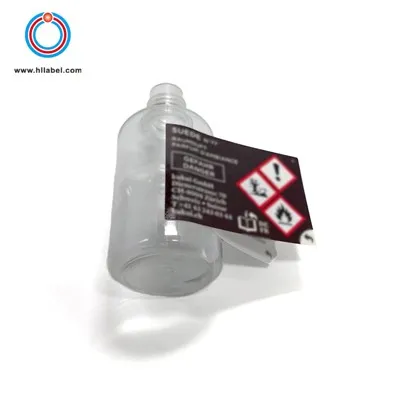
First, we start with basic site checks, because you’d be shocked how often the problem isn’t the label—it’s the surface it’s supposed to adhere to. For the snack brand client, we started with the packaging substrate. Their bags were made of a co-extruded polypropylene (PP) film that’s used for its stiffness and moisture resistance, but PP is a low-surface-energy (LSE) material, meaning it has a surface tension so low that standard adhesives can’t form a strong chemical bond. Our client had just switched to a new supplier for their plastic film to cut costs, which meant the film hadn’t undergone corona treatment—this is a standard process that oxidizes the film’s surface to raise surface energy, making it adhesive-friendly. We tested this first by performing a simple dyne pen test: we dragged a dyne solution across the bag’s surface; if the solution beaded up instead of spreading evenly, that confirmed a surface energy level below 38 dynes/cm, the minimum we recommend for foldable labels. For LSE substrates like untreated PP, PE, or some specialty films, even the best adhesive on a good label can’t create a lasting bond. Another common site issue: surface contamination. If the packaging surface has leftover mold release agents, dust, ink residue from a previous printing step, or even skin oils from handling, that creates a barrier between the label adhesive and the substrate. We’ve seen clients handle film rolls with bare hands before laminating labels—natural skin oils leave a thin, invisible film that prevents adhesion, especially for thin foldable labels that have less adhesive to work with. In the snack client’s case, their new film supplier had skipped corona treatment to speed up production, which was the first red flag we flagged during that initial site check.
Next, we move to label-specific variables, starting with adhesive type—this is where foldable labels differ from standard static labels, because they’re designed to flex and bend with packaging. Foldable labels need a pressure-sensitive adhesive (PSA) that balances tack, shear strength, and flexibility, not just a high-tack adhesive that works for flat surfaces. The snack brand was using a standard acrylic PSA for their foldable labels, but acrylic PSAs perform poorly on LSE substrates (like their untreated PP) because they don’t spread as evenly to form a strong bond. We suggested switching to a rubber-modified acrylic or a proprietary synthetic rubber PSA, which has better wetting properties for low-surface-energy materials and stays flexible enough to bend with the bag’s folds without cracking or peeling. We also checked adhesive weight: foldable labels need a minimum adhesive coat weight to handle flex and handling, especially if they’re being applied to textured or uneven surfaces. If the coat weight is too thin, it can’t form a continuous bond across the label, leading to weak spots that pop off during shipping. For the snack brand, their adhesive coat weight was 20 g/m², which is too low for their application—we recommended increasing it to 28 g/m², a standard for foldable labels used on resealable bags that flex. Another label-specific factor: liner release. The paper or plastic liner that the adhesive sits on has a silicone coating to let it peel off cleanly, but if the release coating is uneven or too strong, it can pull adhesive away from the label’s edges during application. We test liner performance by peeling a label off the liner at a consistent speed and angle; if we see adhesive residue left on the liner, that means the release is too strong, so the label isn’t transferring adhesive properly to the packaging. For the snack client, their liner supplier had recently changed the silicone formulation, which caused uneven release across the liner—small patches where too much adhesive was stuck to the liner, leading to weak bonds when the label was applied.
After checking the label and substrate, we move to application process factors, because even a perfect label on a clean surface will fail if applied wrong. The most common application mistake for foldable labels is pressure. Pressure-sensitive adhesives need consistent, even pressure to “wet out” onto the substrate—this is when the adhesive flows into the tiny micro-grooves on the packaging surface, creating a mechanical bond that complements the chemical bond. If you apply too little pressure, the adhesive can’t spread into those grooves, leading to a weak bond; too much pressure can squeeze adhesive out from the edges of the label, leaving gaps where the substrate and adhesive don’t connect. For foldable labels, we recommend a minimum of 20 psi of pressure across the entire label, applied with a rubber roller (not a hard metal roller, which causes uneven pressure). The snack brand was applying labels by hand using a manual roller, and their team was only applying 12 psi on average, since they were rushing to hit production targets. We suggested adjusting their roller settings to maintain 22 psi, and adding a small hold time after application—foldable labels need at least 10 seconds of pressure at room temperature (not cold, which slows adhesive flow) to fully cure the bond. Another application mistake: temperature and humidity. Adhesive performance drops in extreme temperatures—if packaging or labels are stored in a cold warehouse (below 60°F/15°C), the adhesive becomes stiff and doesn’t wet out properly. High humidity can also cause issues if moisture gets trapped between the label and substrate, creating a barrier that prevents adhesion. The snack brand stored their film rolls in a loading dock that dropped to 50°F in winter, which contributed to their problem—we suggested moving storage to a temperature-controlled room between 65–75°F (18–24°C) with humidity between 30–50%, which is ideal for foldable label application. We also noticed their application area had dust from a recent floor cleaning, so adding a filter to their HVAC system reduced airborne particles that stuck to packaging before labeling.
Once we fixed those immediate factors for the snack client, we also checked long-term durability, because foldable labels aren’t just stuck on at application time—they need to hold up through shelf life, shipping, and handling. We test label durability using a few standard methods: the 180-degree peel test, which measures how much force it takes to peel the label off at an angle; the flex test, where we fold the label 100 times over a 90-degree angle to mimic bag use; and the aging test, where we store the labeled packages for 30 days at 100°F (38°C) to simulate warehouse heat. The snack client’s old label failed all three tests: the 180-degree peel force was only 1.2 N/cm, well below our 2.0 N/cm minimum, the flex test caused peeling after 20 folds, and the aging test saw 80% of labels peel after 15 days. After switching to our rubber-modified PSA, increasing adhesive coat weight, and adjusting their application process, we retested: peel force jumped to 2.8 N/cm, the flex test passed 100 folds without peeling, and the aging test had less than 1% failure rate. That fixed their customer complaints within two production runs, which was a win for both us and the client.
I’ve found that the biggest mistake businesses make when troubleshooting foldable label adhesion is jumping to conclusion number one—“the labels are bad”—instead of working through the process step by step, from surface to application. Every factor we checked for the snack client was tied to a small change they made to cut costs or speed up production: switching film suppliers, changing liner formulations, rushing application. Most adhesion issues aren’t about a defective label batch—they’re about misalignment between the label, substrate, and application process. That’s why we don’t just sell foldable labels; we work with clients to walk through each of these steps, because we’ve seen firsthand how a small adjustment can make all the difference.
If you’re dealing with foldable labels that won’t adhere, don’t hesitate to reach out to our team for a personalized troubleshooting walkthrough. We can help you test your substrate, adjust adhesive specs, or refine your application process to get reliable adhesion for your products. Let’s work together to fix that issue before it becomes a customer complaint or a production delay.
Foldable Label References
- Satas, D. (2010). Handbook of Pressure Sensitive Adhesive Technology (3rd ed.). Van Nostrand Reinhold.
- Modern Flexible Packaging: Materials, Processing, and Applications. (2018). Society of Plastics Engineers.
- Surface Energy and Adhesion: A Practical Guide for Packaging Engineers. (2021). Packaging Technology and Science.
- Foldable Label Design and Durability Testing Protocols. (2022). International Packaging Association.
Huizhou Huilong Printing Company Limited
As one of the most professional foldable label manufacturers in China, we have world-leading production equipment and strong manufacturing capabilities. Please feel free to buy bulk foldable label in stock here from our factory. Also, pricelist is available.
Address: Xin’er Group, Xiamazhuang, Huicheng District, Huizhou City, Guangdong Province
E-mail: huilong278@163.com
WebSite: https://www.huilonglable.com/
