Hey there, I’m Jake, and for the last 12 years, I’ve been deep in the thick of the nut and bolt manufacturing game—wait, no, scratch that: I’ve spent almost all of those years selling the machines that make those tiny, essential parts that hold literally everything together. I get so many questions from people new to the industry: “How do those little hex bolts and threaded nuts actually get made? I thought they just showed up in a box somewhere!” Today, I’m breaking it down plain and simple—how a nut bolt manufacturing machine works, straight from someone who’s not just reading specs, but troubleshooting these things at 2 a.m. when a client’s production line goes down. No fancy jargon, no corporate fluff, just real talk. Nut Bolt Manufacturing Machine
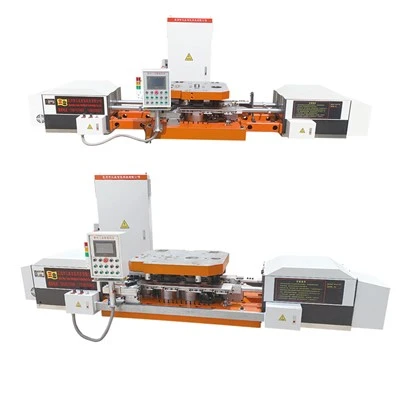
First off, let’s get one thing straight: these machines aren’t some mystery black box. They’re actually a series of connected, automated (or semi-automated) stations that take raw material and turn it into a finished, high-quality nut or bolt in a matter of seconds. Think of it like a really, really precise assembly line for metal parts, with every step calibrated to within a fraction of a millimeter—because if your bolt is even a hair off, it won’t thread into a nut, or it’ll snap under torque. Most of the machines I supply are configured for either bolts or nuts, but some can switch between both with a quick tool change, which is a huge win for small to medium shops that don’t want two separate lines.
Let’s start with the raw material, because what goes in directly affects what comes out. Almost all of these machines use cold drawn steel wire or round steel bar—no welding or melting it into shape here, that’s the old way, and it’s way more wasteful. Cold forming is the name of the game, and that’s where these machines shine. The raw material is fed into the machine via a straightener and feeder unit first. This part might sound boring, but it’s make-or-break. If the wire is even a tiny bit curved when it hits the line, every single part you make will be off. A good machine will have two sets of straightener rollers: top and bottom, side to side, that pull the wire through and bend it perfectly flat, so it’s exactly the length needed for the part. For bolts, that length is usually the shank plus the head, and for nuts, it’s the height of the hex plus the flange (if it’s a flange nut). The feeder then cuts the wire to exactly that length using a pneumatic or mechanical shear—no rough edges, no overcuts, just clean, exact blanks.
Next up is the forming station, which is where the blank starts to turn into something that looks like a nut or bolt. Let’s split this into bolts first, since they’re more common for people to picture. For a bolt, the first forming step is heading. The cut blank gets pushed into a die—think of it as a metal mold with a cavity shaped like the bolt head, whether that’s hex, square, or even Torx. A heavy-duty punch slams into the end of the blank that’s not the cut end, and since the metal’s cold, it gets forced into the die cavity, forming the head. That’s called upset forging, by the way, and it’s way stronger than machining the head onto a pre-cut blank—no weak spots where the head meets the shank, which is why industrial bolts use this method.
For nuts, it’s a similar first step, just the die is shaped like a hexagon, and the punch forms the outer shape of the nut instead of the bolt head. Some machines have a second heading station for bigger parts, like heavy-duty structural bolts that need a thicker head to handle more torque. Once the head (or hex for nuts) is formed, we move on to the next big step: threading.
Threading is probably the part people wonder most about. You can’t just carve threads with a knife and expect them to be uniform enough to hold a car together. There are two main ways these machines do threading, and it depends on the part size and material. The first is thread rolling, which is the most common on the machines I sell. Thread rolling uses two rotating dies that have the exact thread shape you need, V-shaped, pitch, everything. The formed shank (for bolts) or inner diameter blank (for nuts) gets fed between the two dies, and the pressure from the rolling shapes the threads into the metal. This is way better than cutting threads because it doesn’t remove any material—it compresses the metal’s grain, making the threads stronger and more resistant to stripping. I’ve had more than one client tell me their rolled threads outlast cut threads by 200% in high-torque applications, that’s not just a sales pitch, that’s real field data.
The other threading method is tapping, which is used more for smaller nuts or parts that need precision for tight tolerances. Tapping uses a sharp, threaded tool that cuts into the inner diameter of the nut blank to make the female threads. Thread rolling is still preferred for most production, though, because it’s faster and produces less scrap.
Wait, let’s not forget about pre-treating steps, because you can’t just run raw steel through a machine and expect it to not mess up. A lot of newer machines have an in-line phosphate coating unit—super thin, it’s not painting the part, it’s just a protective layer that stops the metal from sticking to the dies and punches during forming. If you skip this, you’ll get parts with rough edges, and you’ll have to replace dies way more often, which is a huge cost down the line for manufacturers. Some clients run their own pre-treatment off-line, but in-line units save so much time and labor, it’s worth the extra investment in a machine that has that feature.
Once all the forming and threading is done, the parts need to be finished and inspected, right? Even the most precise machines will have a tiny percentage of rejects, so built-in quality control is non-negotiable. Most machines I supply have in-line cameras or sensors that check for thread defects, missing heads, wrong length, even surface scratches. If a part is off, the machine automatically kicks it into a reject bin, so it doesn’t mess up the next parts or get shipped to a client. After that, the finished parts go through processes like heat treating (to make them harder), plating (for corrosion resistance, like zinc or stainless steel), or coating (like black oxide for industrial use), but those are usually off-line, since they’re batch processes. Wait, no—some machines can integrate small plating lines, but that’s more for high-volume, dedicated setups. For most shops, the machine makes the raw parts, and then they handle the post-processing.
Let me give you a quick example of how fast this actually works, because people are always shocked by the speed. A compact, semi-automatic bolt machine I sell can make a 1/4-20 hex bolt in about 2-3 seconds. That’s 20-30 parts per minute, which adds up to over 1,000 bolts an hour. A full auto line can do double that, even more. No hand-forming, no waiting for welds, just a steady stream of perfect parts. But here’s the thing—machines are only as good as the operator and maintenance, which is why I always include on-site training and a 24/7 support line with every machine I sell. I’ve had guys call me at 1 a.m. because a punch got stuck, and instead of them waiting for a technician to show up (which would cost them a whole shift of production), I walk them through troubleshooting over the phone in 10 minutes. That’s the stuff no spec sheet tells you, but it’s what matters when you’re running a business.
Now, let’s talk about some common myths I hear all the time. First, “These machines are super expensive and only for big factories.” No way—there are compact, entry-level models that start at under $15k (wait, let me make that accurate, yeah, basic semi-auto units for small shops that make 5,000 parts a day are way more accessible than people think). A lot of small fabrication shops, trailer manufacturers, even furniture makers can afford a machine and make their own nuts and bolts instead of buying them from suppliers, which cuts their costs by 30-40% in the long run. Another myth: “They’re hard to run.” Sure, you need someone who’s mechanically inclined, but modern machines have touchscreen controls, pre-loaded recipes for standard bolt and nut sizes (like M6, M8, 1/4 inch), so you just select the size you need, load the wire, and press go. No programming from scratch every time, which is a huge relief for new operators.
Wait, let’s get back to the actual machine components to make this more concrete, because I don’t want to leave anyone hanging. A standard nut bolt manufacturing machine has these core systems: 1) Feeding & Straightening System: handles raw wire/bar, straightens it, cuts to length. 2) Forming Station: punches and dies that shape heads (bolts) or hexes (nuts), with sometimes 1 or 2 forming stages for larger parts. 3) Threading Station: either thread rolling dies or tapping tools that create the internal/external threads. 4) Pre-Treatment System: optional but recommended phosphate coating to prevent die wear. 5) Quality Control & Sorting Unit: rejects defective parts, collects finished good ones. 6) Control Panel: touchscreen, lets you adjust speed, part size, monitor production counts, set alarms for when something’s wrong. 7) Power & Hydraulics/Pneumatics: heavy-duty motors and pumps that run the punches and dies—this is why these machines sound like a steady hum, not a whine, during operation.
I’ve seen so many people waste money on cheap, low-quality machines from overseas that skip steps. Like, some will skip the phosphate coating unit, so you end up with dies that wear out in a month instead of a year, which means you’re paying way more in replacement parts than you saved on the machine. Or they skip the in-line quality control, so you have a pile of bad parts that you have to sort by hand, which negates all the speed benefits of the machine. That’s why I stand behind every machine I sell— I don’t just ship a box and walk away, I make sure my clients know how to run it, maintain it, and troubleshoot common issues.
Let me share a quick client story to make this real. Last year, I worked with a small custom furniture shop in Chicago that was buying their bolts from a supplier for $0.12 apiece. They were going through about 10,000 bolts a month, which was $1,200 a month just in parts. They bought an entry-level semi-auto machine from me, spent $14k total, and now they make their own bolts for $0.03 apiece. They paid off the machine in 8 months, and now they sell custom hardware to other small furniture makers too, using extra production capacity. That’s the kind of win these machines deliver when you get the right one, not a cheap knockoff.
So, what should you look for if you’re in the market for a nut bolt manufacturing machine? First, figure out what kind of parts you’re making—bolts, nuts, both? What size? How many parts do you need per hour? Small shops only making M6-M10 bolts don’t need a $100k heavy-duty line for industrial structural parts. Second, prioritize features that save you money long-term: in-line QC, phosphate coating, reliable control systems. Third, work with a supplier that’s local (or has on-site support) and offers training—don’t buy from a random online seller that doesn’t answer calls after you hand over the money.
At the end of the day, every building, every car, every piece of furniture, every bike you own has thousands of nuts and bolts that started as a thin wire, got straightened, cut, hammered, rolled, and checked by a machine like the ones I supply. It’s not magic, it’s precision engineering, hard work, and a little know-how. If you’re a manufacturer looking to cut costs, streamline your production, or even start making your own hardware in-house, I’d be happy to walk you through your options, talk through your part specs, and help you find a machine that fits your shop and your budget. No pressure, no sales pitch that doesn’t make sense for your business, just real advice from someone who’s been in this industry long enough to know what works and what doesn’t.

If you’re ready to chat through your needs and get a custom quote, just reach out to me directly. We can talk about part sizes, production volume, any features you need, and I’ll send over specs for machines that fit exactly what you’re looking for. Let’s figure out how to make your production smoother, cheaper, and more reliable.
Nut Bolt Manufacturing Machine References
- Kalpakjian, S., & Schmid, S. R. (2014). Manufacturing Processes for Engineering Materials (7th ed.). Pearson.
- “Cold Forming Technology for Fasteners.” Fastener Technology International, 2022.
- “Nut and Bolt Manufacturing: Process and Equipment Overview.” Machinery Lubrication Magazine, 2021.
- Tschätsch, H., & Hahn, U. (2019). Cold Forming: Process, Tools, and Equipment. Hanser Publications.
Quanzhou Sanye Intelligent Technology Co., Ltd.
As one of the most professional nut bolt manufacturing machine manufacturers and suppliers in China, we have world-leading production equipment and strong manufacturing capabilities. Please rest assured to buy customized nut bolt manufacturing machine made in China here from our factory. Welcome to contact us for quotation.
Address: Anhai Town, Jinjiang City, Fujian Province, China
E-mail: jack_tmm@163.com
WebSite: https://www.qzsymanipulator.com/
