If you’ve ever stepped onto a processing facility floor—whether that’s a chemical plant, a mining site, or a specialty manufacturing warehouse—you’ve probably seen our jumbo bagging machines hum quietly in the corner, moving hundreds of tons of material every shift. Over the past 12 years as a supplier of these systems, I’ve lost count of how many times I’ve been asked one specific question from plant managers, EHS coordinators, and process engineers: “Can your jumbo bagging machine be used for hazardous materials?” Jumbo Bagging Machine
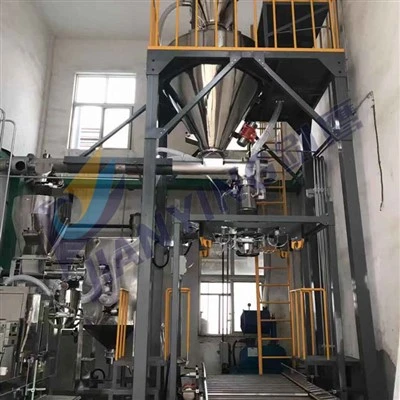
It’s a fair question. Hazardous materials (hazmat) carry inherent risks: flammable dust that can ignite at the slightest spark, toxic powders that cause respiratory damage if inhaled, corrosive substances that eat through unprotected equipment, or reactive compounds that can explode if contaminated with even a tiny amount of the wrong material. For a long time, the default assumption among many operators was that jumbo baggers were too basic, too open, or too unreliable for handling these high-stakes products. They’d stick to manual bagging or smaller, more specialized equipment that felt safer, even if that meant slower throughput, higher labor costs, and more human error.
But that assumption is outdated. Over the last two decades, the design of jumbo bagging machines has evolved dramatically to meet the strict global standards for hazmat handling, and when configured correctly, these systems are not only suitable for hazmat—they’re often the most efficient, consistent, and safe way to package large volumes of dangerous materials. Let’s break down what makes that possible, and what you need to know to make it work for your operation.
First, let’s clarify what “hazardous materials” means in this context, because not all hazmat is the same, and not all jumbo baggers are built to handle every type. The UN’s Globally Harmonized System of Classification and Labeling of Chemicals (GHS) categorizes hazmat by physical, health, and environmental hazards, so a machine built for flammable dust isn’t the same one you’d use for a toxic heavy metal powder or a corrosive industrial chemical. As a supplier, we never approach hazmat orders with a one-size-fits-all mindset; every custom build starts with a deep dive into the material’s specific properties, your facility’s layout, and your team’s training protocols.
Take flammable organic powders, for example—common in agriculture (fertilizers), pharmaceuticals (active pharmaceutical ingredients, or APIs), and specialty chemicals. These materials have tiny particle sizes that can stay suspended in air for minutes, creating explosive atmospheres when mixed with oxygen and an ignition source. For these products, our jumbo bagging machines get a full explosion protection retrofit, aligned with ATEX 95 and NFPA 652 standards (the leading global codes for dust explosion prevention). That means we replace all standard electrical components with intrinsically safe parts that can’t spark, add explosion vent panels to the machine frame that redirect pressure away from workers and the facility, and integrate a continuous inert gas purge system that fills the bag and the machine’s hopper with nitrogen or argon to push oxygen levels below the 8% threshold most flammable powders require to ignite. We also add a grounded bag spout and continuous static dissipative components, because even small static sparks from a moving plastic bag can trigger an explosion in the right atmosphere. I remember a call two years ago with a fertilizer plant manager in Iowa who’d been using manual bagging for their granular ammonium nitrate, which is highly explosive when fine. They were dealing with 12% product loss from human error and a 60% turnover rate for their bagging team, who couldn’t handle the stress of working with the material all day. We built them a custom bagger with explosion protection, and within six months, their product loss dropped to less than 1%, their EHS incident rate for bagging fell to zero, and they were able to increase their daily output by 35% without adding any staff. That’s the kind of win that changed how I talk about hazmat bagging.
Then there are toxic materials—think lead pigments, heavy metal powders, or specialty pharmaceutical intermediates that are fatal if inhaled or absorbed through skin. For these products, containment is non-negotiable. A single leak in a bagging line can expose an entire shift of workers, cause environmental contamination, and lead to massive regulatory fines. Standard jumbo baggers are open by design, but our hazmat-specific models are fully enclosed, with HEPA filtration systems integrated into every point where material could escape. The hopper is sealed with a double-diaphragm valve that ensures no material spills when the bag is changed, and we use a “no-touch” bag loading system: workers never come into direct contact with the bag or the spout. Instead, the machine uses a motorized lift that positions the bag, aligns the spout, and locks it in place, so the only interaction is pressing a button from a remote control panel outside the enclosed cabinet. We also add real-time air monitoring sensors that check for trace levels of the material in the machine’s enclosure, triggering an automatic shutdown and air filtration if levels exceed safe limits. A pharmaceutical client in Germany reached out to us last year after a supplier’s generic bagger leaked a fine API intermediate, leading to three workers being admitted to the hospital for chemical exposure. They needed a system that could handle 250 kg bags of the powder without any risk of escape, and their regulatory team required all design documents to be auditable for compliance with EU’s REACH and OSHA’s Process Safety Management standards. We delivered a fully contained, positively pressurized bagger, and their audit last quarter had zero findings related to bagging line safety. That’s the level of specificity hazmat handling demands.
Corrosive materials are another category that often trips people up—acids, alkalis, and salt solutions that can eat through steel, plastic, and even rubber over time. For these products, standard jumbo bagging machines won’t last a month, let alone years, of continuous use. Our approach here is two-fold: first, we use construction materials that are resistant to the specific corrosive substance. That might mean 316L stainless steel for most strong acids, polyethylene linings for hoppers that handle alkaline solutions, or specialty fluoropolymers for extremely reactive chemicals. Second, we add secondary containment features, like a drip tray under the bag spout that captures any small leaks, and corrosion monitoring sensors that track exposure levels in high-wear parts like valves and seals. We also build in easy access for parts replacement, because even the most corrosion-resistant materials will need seals or valves changed periodically—we design those to be swappable in under 15 minutes, so downtime for maintenance is minimal. A mining client in Canada that processes lithium hydroxide (a highly corrosive base) told us that their old bagger, built with standard carbon steel, was rusting through within 18 months, leading to unplanned shutdowns every other week. We built them a 316L stainless steel bagger with PTFE-coated seals, and two years later, they haven’t had a single structural failure related to corrosion. Their maintenance team now only does quarterly preventive checks instead of weekly emergency repairs, saving them over $200,000 a year in downtime costs.
Of course, none of this works without rigorous testing and compliance. As a supplier, we don’t just draw up a design and send it to manufacturing—every hazmat jumbo bagger we build goes through a series of third-party tests before it ships. For explosion-proof models, that means independent testing of inert gas purge efficiency, static discharge levels, and explosion vent function. For toxic containment models, we do air leakage tests using tracer gases to ensure that even at maximum throughput, no trace of the product escapes the enclosure. For corrosion-resistant models, we do salt spray and chemical immersion tests on all components to verify their lifespan. We also provide full documentation for every system, including operation manuals tailored to the specific material, training guides for your team, and audit trails that make it easy to pass inspections from OSHA, EU OSHA, or any other regulatory body you operate under.
There’s a common misconception that automated bagging systems for hazmat are prohibitively expensive, and that manual bagging is cheaper in the short term. But when you factor in labor costs (hiring and training workers to handle hazmat is costly, and high turnover adds up), product loss (many hazardous materials are high-value, so even a small percentage lost makes a big impact), and regulatory fines (violating hazmat handling standards can result in fines of $100,000 or more per incident), jumbo bagging machines often end up being the most cost-effective choice. The Iowa fertilizer plant I mentioned earlier, for example, calculated that their return on investment for the new bagger was less than 10 months, even after accounting for custom design and retrofit costs.
That said, there are caveats. A standard, off-the-shelf jumbo bagging machine—built for sand, grain, or other non-hazardous bulk materials—should never be used for hazmat. The open design, standard electrical components, and untested seals of those machines pose serious safety risks to workers and facilities. It’s critical that you work with a supplier who specializes in hazmat-compatible bulk handling, and who will ask you detailed questions about your material’s properties, your facility’s layout, and your regulatory requirements before even suggesting a system. We never push a system on a client; if we determine that a customized jumbo bagger isn’t the right fit for their specific hazmat, we’ll tell them, and we’ll help them find an alternative that meets their needs.
For example, if a client is handling a highly reactive material that requires batch processing instead of continuous flow, we might recommend a smaller, modular bagging unit that integrates with their existing batch system, rather than a full jumbo bagger line. If a plant has limited space, we can build compact baggers that fit into existing tight layouts, with all the same safety features. We also offer post-installation support: our team will come to your facility to train your operators on how to use the system, perform annual safety audits, and upgrade the machine if new standards or regulations come into effect.
At the end of the day, the question “Can a jumbo bagging machine be used for hazardous materials?” isn’t a yes or no question—it’s a “how” question. When designed, configured, and tested specifically for the material you’re handling, jumbo bagging machines are safer, more efficient, and more reliable than manual bagging or outdated equipment. They protect your workers from exposure, reduce product loss, lower downtime, and help you stay compliant with increasingly strict global hazmat regulations.

If you’re currently struggling with manual bagging of hazardous materials, dealing with safety incidents, or looking to upgrade your line to meet new regulatory standards, I encourage you to reach out to our team for a consultation. We’ll walk you through your options, answer all your questions, and help you find a customized solution that fits your operation and your budget.
Jumbo Bagging Machine References:
- ATEX 95 Directive 94/9/EC on equipment and protective systems intended for use in potentially explosive atmospheres
- NFPA 652, Standard on the Fundamentals of Combustible Dusts
- OSHA Process Safety Management (PSM) Standard, 29 CFR 1910.119
- EU REACH Regulation (EC) No 1907/2006 on the registration, evaluation, authorization and restriction of chemicals
- Globally Harmonized System of Classification and Labeling of Chemicals (GHS), United Nations, 2023 Revision
Wuxi Jianying Intelligent Equipment Co., Ltd.
We are one of the most professional jumbo bagging machine manufacturers and suppliers in China, featured by quality products and good price. Please rest assured to buy durable jumbo bagging machine for sale here from our factory. Welcome to contact us for custom service and OEM service.
Address: No.88, Xinyang Road, Ehu Town, Xishan District, Wuxi City, Jiangsu Province, P.R.China
E-mail: wuxijianying@163.com
WebSite: https://www.wuxijianying.com/
